
DELHI NCR • HOME ROOFTOP SOLAR
Power Your Delhi Home with Rooftop Solar
Looking for reliable residential solar installers near you? Get a professionally planned rooftop solar system, guidance on available government subsidies, and support from site survey to commissioning.
✓ Home solar specialists
✓ Subsidy guidance
✓ Quality installation
Free consultation • No obligation • Delhi residential enquiries
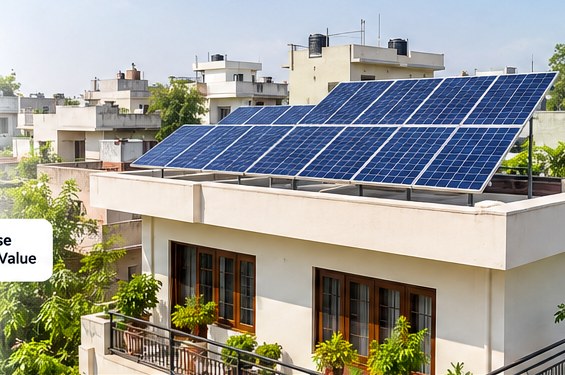
A practical solar solution for real Delhi homes , not just large villas.
Residential Solar Solutions
Home Solar Systems Built Around Your Electricity Needs
From smaller homes to multi-floor Delhi residences, we recommend solar based on your electricity usage, roof area, and eligibility. Not a one-size-fits-all package.
Residential Solar Panel Installation
Site assessment, customized system design, rooftop mounting, electrical integration and commissioning for Delhi homes.
Solar Panels & Inverters
Understand panel technology, inverter choices, warranties and expected energy performance before selecting your home solar system.
Subsidy & Net-Metering Support
Guidance on applicable government schemes, required documents, DISCOM steps and commissioning procedures.
Searches such as “residential solar companies”, “best home solar companies” and “residential solar panel installers near me” usually start with one question: who can design, install and support a dependable system for my actual home? Our consultation addresses precisely that.
Delhi Solar Subsidy
Understand Your Rooftop Solar Subsidy Before You Install
Eligible residential consumers in Delhi may qualify for both central PM Surya Ghar assistance and Delhi Government state subsidy, subject to applicable terms and approved project cost.
Potential combined support for an eligible 3 kW system
Up to ₹1,56,000*
Central assistance up to ₹78,000 + Delhi state subsidy up to ₹78,000 (subject to state cap and applicable cost calculation).
₹30,000 Central subsidy per kW for first 2 kW
₹18,000 Central subsidy for 3rd kW
₹78,000 Central 3 kW maximum
*Not a guaranteed payout or quote. The Delhi state subsidy is calculated under the published policy, capped at ₹78,000, and can be lower based on eligible project cost, scheme route, approvals and eligibility. Scheme rules can change. Verify on the official Delhi Solar Portal and PM Surya Ghar Portal.
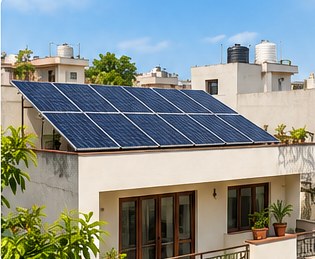
What affects your subsidy eligibility?
✓ Residential electricity connection and applicant eligibility
✓ Available roof space and technical feasibility
✓ System size, DISCOM and approved vendor or project route
✓ Application, installation and inspection requirements
Additional scheme models may have separate conditions. We help you understand the relevant route before you proceed.
Choose Your Capacity
Which Home Solar System Is Right for You?
System capacity should reflect your electricity consumption and usable rooftop space. These are starting points for a customized recommendation.
1 kW
Smaller electricity demand
Suitable to explore for lower-usage households with limited daytime electricity needs.
2 kW
Moderate electricity demand
Often considered for homes with a moderate monthly bill and adequate shadow-free rooftop area.
3 kW
Popular residential option
Often evaluated by households using roughly 150–300 electricity units per month.
Larger systems may also suit higher-consumption homes. Actual generation, costs and savings vary with equipment, orientation, shading, tariff and usage.
Free Expert Guidance
Find Out Whether Rooftop Solar Makes Sense for Your Home
A quote should explain more than the number of panels. Share a few details and get a discussion around usable roof area, system size, subsidy guidance and installation needs.
Check Your Solar Eligibility
Our team can review your requirements and explain the next steps.
How We Work
From Your First Call to a Working Solar System
Every rooftop is different. Our process keeps expectations, timelines and responsibilities clear.
01
Free Consultation
We discuss your monthly bill, electricity consumption and installation location.
02
Site Survey & Design
We assess available space, shading and electrical requirements to recommend system capacity.
03
Installation & Approvals
Equipment, structure, wiring and relevant documentation are coordinated as per project scope.
04
Commissioning & Support
System testing, handover and support after installation, including applicable net-metering steps.
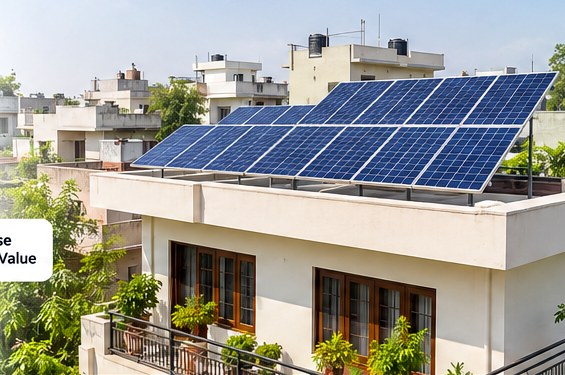
Why Solar Pulse Energy
Choose a Residential Solar Company That Plans for the Long Term
The best home solar panel company for you is one that evaluates your roof properly, explains equipment options clearly and supports the installation after it is commissioned.
✓ 11+ years of EPC industry experience*
✓ Project planning, installation and commissioning expertise
✓ Support with the relevant subsidy and approval steps
✓ Equipment and configuration recommendations based on your home
✓ Clear technical discussion before quotation
Learn Before You Buy
What to Look For in the Best Residential Solar Panels
Better solar decisions come from comparing a complete system rather than judging a panel only by its wattage or price.
◉
Panel Efficiency & Performance
Review module specifications, temperature characteristics and actual usable roof area.
▣
Inverter & System Design
The right inverter and electrical configuration can matter as much as the solar modules themselves.
⚙
Warranty & Maintenance
Ask about product and performance warranties, workmanship support, monitoring and cleaning requirements.
Frequently Asked Questions
Delhi Residential Solar: Your Questions Answered
Clear answers on home solar panels, installation, subsidy and government applications.
The central PM Surya Ghar subsidy can be up to ₹78,000 for a qualifying 3 kW household system. Delhi’s published state subsidy framework lists support of up to ₹78,000, giving a potential combined figure of ₹1,56,000. The actual state amount depends on the eligible project cost, applicable procurement model, approval and scheme rules, and may be lower.
Eligibility depends on the residential electricity connection, project location, system capacity, scheme route, required documentation, rooftop feasibility and current program terms. Special offers for some consumption categories may have additional conditions. Check official portal rules before proceeding.
Start from the official PM Surya Ghar portal, check your DISCOM and connection details, follow the online process and work with an appropriately eligible vendor where required. The final workflow includes installation, inspection and subsidy verification.
Some government announcements describe special models for eligible households, but the application route, participating vendors, tender conditions and eligibility must be verified. Do not assume every household or every privately quoted rooftop installation qualifies for a zero-upfront-cost offer.
It can suit many medium-usage homes, but the right system depends on monthly consumption, seasonal appliance load, roof orientation, shading and available area. A site assessment provides a more accurate recommendation.
Pricing depends on size, panel and inverter brand, mounting structure, electrical work, roof conditions, applicable taxes and service scope. Request a detailed quotation and compare costs before and after eligible subsidies.
Solar can reduce purchased electricity, but results depend on generation, consumption patterns, the tariff and net-metering arrangement, weather and fixed charges. Zero bills are not guaranteed.
Yes, many typical independent homes with flat concrete rooftops can be assessed for a suitable system. We look at roof strength, usable area, shadows, access and electrical safety first.
The on-site work may be completed in days for a straightforward small system, but total project time depends on the survey, materials, permissions, inspections, DISCOM processes and scheduling.
There is no universal best panel for every roof. Compare certified modules, efficiency, quality assurance, warranties, service availability and system compatibility for your budget and site.
Many turnkey installers assist with the required submission and coordination, but the final approval and meter process depend on your DISCOM. Confirm the exact scope of support in the proposal.
Periodic visual checks, safe cleaning when needed and monitoring are useful. The frequency depends on Delhi dust levels, local conditions and manufacturer instructions; electrical work should be handled by qualified personnel.
Contact Our Team
Ready to Install Solar Panels on Your Delhi Home?
Tell us about your property and electricity needs. We’ll help you understand the system options, available subsidy route and next steps for a residential rooftop solar quotation.
Phone
+91 89368 70719
it@solarpulseenergy.com
Serving residential enquiries in Delhi NCR. Service coverage and survey scheduling are subject to confirmation by our team.
Get Your Free Rooftop Solar Quote
Solar Pulse Energy Pvt. Ltd. | Residential Solar Installation in Delhi NCR
+91 89368 70719 | it@solarpulseenergy.com | www.solarpulseenergy.com
Government subsidies are subject to eligibility, programme rules and applicable approvals.